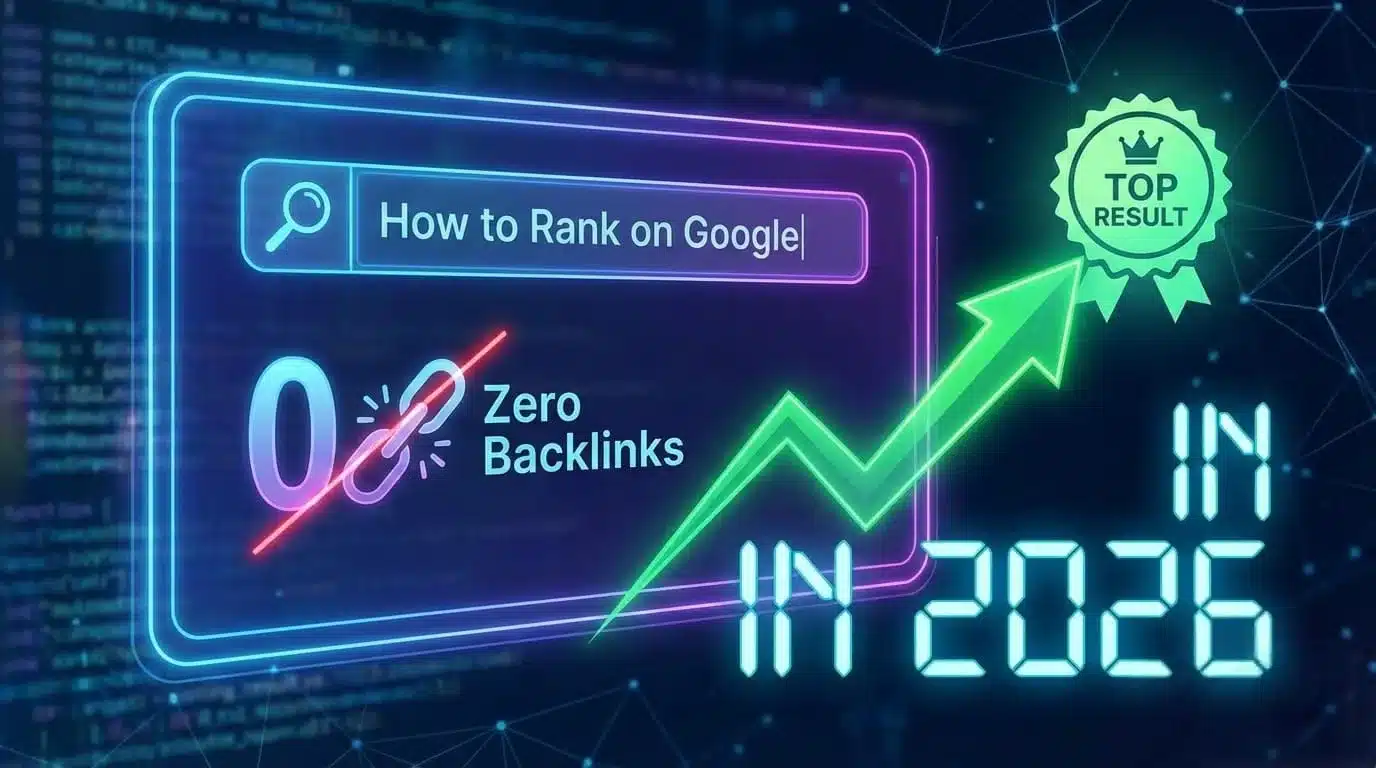
How to Rank on Google with Zero Backlinks in 2026
Ranking on Google without backlinks sounds almost impossible—especially when you hear everywhere that backlinks are the backbone of SEO. As a beginner or new blogger, this advice can feel discouraging.
But here’s the honest truth: you can rank on Google with zero backlinks, particularly if you’re running a new blog, have a low budget, or are targeting low-competition keywords.
In this beginner-friendly guide, I’ll walk you through practical, real-world SEO strategies that focus on content quality, search intent, and on-page optimization—not link building.
Also read: Is Google Dying? The Future of Search and SEO in 2025
Can You Really Rank on Google Without Backlinks?
Yes —andthis isn’t just theory.
Google has clearly stated that backlinks are only one of many ranking factors. What matters more, especially for smaller keywords, is how helpful and relevant your content is.
Google prioritizes:
- Helpful, people-first content
- Search intent satisfaction
- Page experience and usability
- Relevance and topical authority
For low- to medium-competition keywords, backlinks are often not required at all.
Step 1: Target Low-Competition Keywords (Most Important Step)
If you ignore this step, even the best-written article may fail to rank.
What Are Low-Competition Keywords?
Low-competition keywords usually:
- Have low search volume (around 10–500 searches per month)
- Are ignored by big authority websites
- Are longer phrases (4–6 words), also known as long-tail keywords
How Beginners Can Find Them
You don’t need expensive tools. Start with:
- Google Autocomplete
- People Also Ask section
- Related Searches at the bottom of Google
- Free tools like Ubersuggest, Keyword Surfer, or AnswerThePublic
Simple Example
❌ Hard keyword: SEO tips
✅ Easy keyword: SEO tips for new blogs with no traffic
Quick rule: If Google’s first page shows small blogs, forums, or Quora posts, you have a real chance to rank.
Step 2: Match Search Intent Perfectly
Google ranks pages that solve exactly what the user is looking for —nothingmore, nothing less.
Types of Search Intent
- Informational: how, what, why
- Transactional: buy, price, deals
- Navigational: brand or website name
Common Beginner Mistake
Writing a general article when users clearly want a step-by-step guide or a specific solution.
What You Should Do Instead
Before writing, search your target keyword on Google and study:
- Article length
- Headings used
- Content format (guide, list, tutorial, comparison)
Then create content that is clearer, more helpful, and easier to understand.
Step 3: Create Content That’s Better Than Page One
You don’t need to write more words—you need to provide more value.
How to Beat Page One Without Backlinks
- Explain ideas in simple language
- Use real-life examples
- Write short, readable paragraphs
- Answer follow-up questions users may have
Google Loves Content That Is:
- Easy to read
- Well-structured
- Beginner-friendly and practical
Remember: clarity always beats complexity.
also read: Unlocking the Secrets: The Best Blogging Platforms to Make Serious Money in 2024-25
Step 4: Master On-Page SEO (Your Strongest Weapon)
When backlinks are missing, on-page SEO becomes your biggest advantage.
On-Page Elements You Must Optimize
- Title tag (use keyword naturally)
- Meta description (to improve click-through rate)
- Clean and short URL
- Proper use of H1, H2, and H3 headings
- Natural keyword placement (no stuffing)
Smart Keyword Placement Tips
- Include the keyword in the first 100 words
- Use it in at least one H2 heading
- Sprinkle it naturally throughout the content
Always write for humans first, Google second.
Step 5: Build Topical Authority Instead of Backlinks
Google trusts websites that cover a topic deeply, not just one article.
Example of a Topical Cluster
Main topic: SEO for Beginners
- What is SEO?
- On-page SEO basics
- Keyword research for beginners
- How to rank without backlinks
Publishing related articles builds trust, relevance, and authority —withouta single backlink.
Step 6: Optimize for Featured Snippets
Featured snippets can push your page above the #1 ranking.
How to Increase Your Chances
- Write clear definitions
- Use numbered or bullet steps
- Answer questions in 40–60 words
Example
Q: What is on-page SEO?
A: On-page SEO is the process of optimizing individual web pages to improve search engine rankings by enhancing content quality, HTML elements, and overall user experience.
Step 7: Improve Page Experience (A Silent Ranking Factor)
Google prefers pages that users enjoy using.
Simple Improvements for Beginners
- Fast-loading pages
- Mobile-friendly design
- Clean navigation
- No annoying or intrusive pop-ups
A great user experience can sometimes outperform backlinks.
Step 8: Be Patient and Stay Consistent
New websites rarely rank overnight—and that’s completely normal.
What You Can Expect
- First impressions: 2–4 weeks
- Ranking movement: 1–3 months
- Stable rankings: 3–6 months
Keep publishing helpful content and updating older posts regularly.
Final Thoughts
Ranking on Google with zero backlinks is absolutely possible when you follow the right strategy. Focus on smart keyword selection, matching search intent, creating genuinely helpful content, mastering on-page SEO, and building topical authority.
This approach doesn’t rely on shortcuts or risky tactics. It requires consistency, patience, and smart planning — and for beginners, it’s one of the most effective and sustainable ways to grow organic traffic in 2026 and beyond.