Active Income vs. Passive Income: Which One Really Builds Wealth?
Money is something everyone wants—but how you earn it matters more than most people realize. Some people trade their time for money every single day, while others work once and keep earning again and again. This difference comes down to active income vs. passive income, and understanding it can completely change how you think about work, freedom, and long-term wealth.
In this blog, we’ll break down both income types in a simple, real-world way so you can decide which path—or mix of both—fits your goals best.
What Is Active Income?
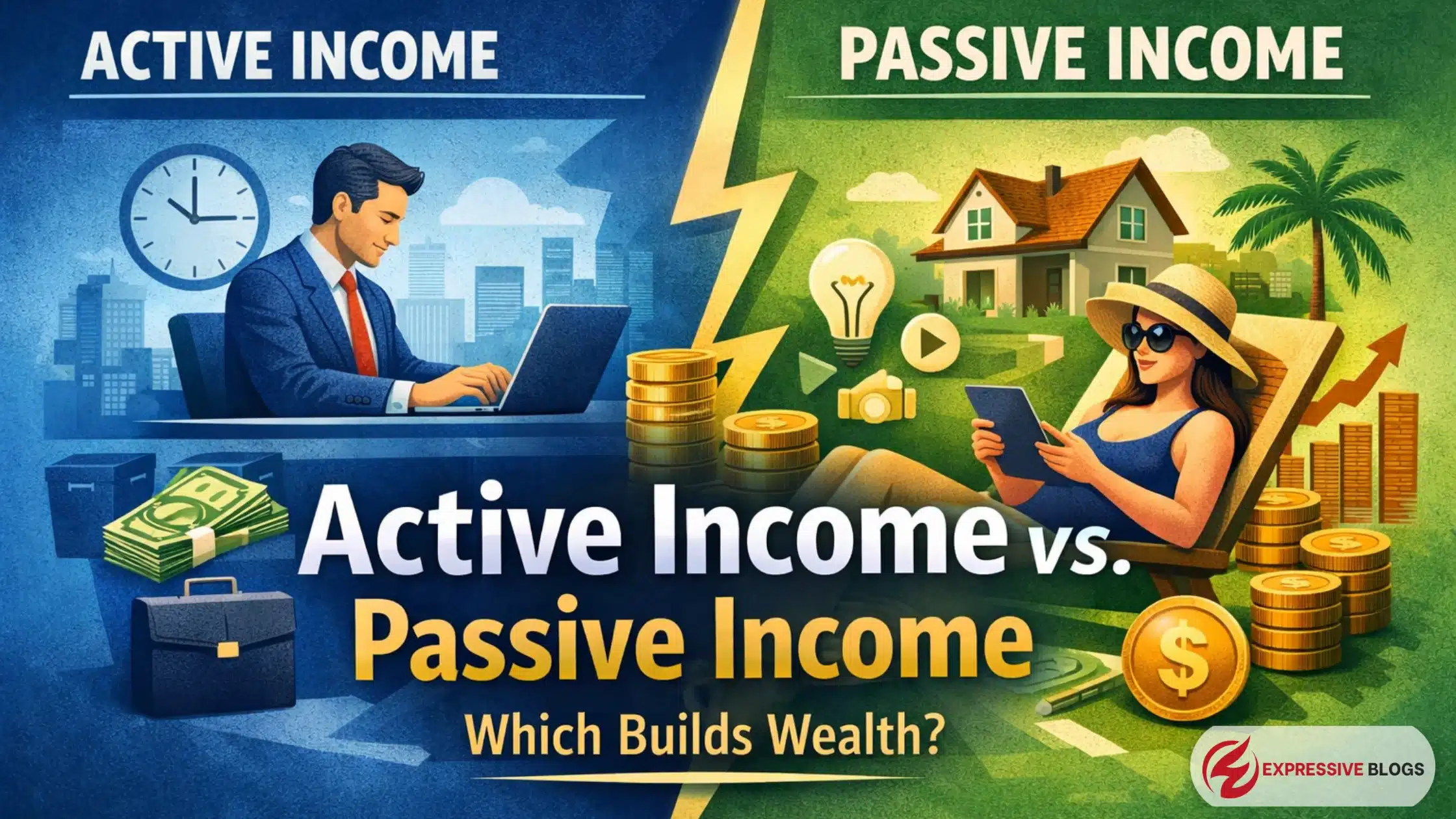
Active income is money you earn by actively working. If you stop working, the income stops too. This is the most common way people earn money, and it’s how most careers are structured.
Whether you’re doing a 9–5 job, freelancing, consulting, or running a service-based business, your earnings depend on your time and effort. You show up, do the work, and get paid. Miss a day, and your income often takes a hit.
Active income offers stability and predictability, which is why it’s usually the starting point for everyone. It’s reliable, easier to understand, and often necessary to cover daily expenses. However, it has a major limitation: time is capped. There are only so many hours in a day, and once they’re used up, income growth slows down.
What Is Passive Income?
Passive income is money that continues to come in even when you’re not actively working. It usually requires effort upfront, but once built, it can generate income with minimal daily involvement.
Examples include earning from blogs, YouTube channels, online courses, digital products, affiliate marketing, investments, or software tools. You may work hard at the beginning, sometimes even harder than a regular job, but the goal is long-term payoff.
The biggest advantage of passive income is scalability. One piece of content, product, or system can earn money repeatedly without requiring the same level of effort each time. This is why passive income is often associated with financial freedom.
That said, passive income is not “easy money.” It takes patience, consistency, and strategy. Many people quit too early because results don’t show up instantly.
Active Income vs. Passive Income: The Real Difference
The core difference between active and passive income lies in how time and money are connected.
With active income, you trade hours for money. With passive income, you trade skills, systems, or assets for long-term earnings. One depends on constant effort, while the other focuses on leverage.
Active income pays fast but stops quickly. Passive income pays slowly at first but can grow over time. Active income keeps you busy; passive income gives you options.
Neither is “better” on its own—the real magic happens when you combine both.
Which One Is Better for Beginners?
For beginners, active income is usually the safest place to start. It helps you build cash flow, gain experience, and understand how money works. Without some form of active income, it’s very hard to survive while building passive streams.
However, relying only on active income can feel exhausting and limiting in the long run. That’s why smart earners use active income to fund and build passive income assets.
For example, someone might work a job during the day and slowly build a blog, YouTube channel, or digital product at night. Over time, the passive income grows and reduces dependence on active work.
Why the Smartest People Choose Both
The most financially successful people don’t choose between active and passive income—they use both strategically.
Active income provides security and steady cash flow. Passive income provides growth, freedom, and long-term wealth. Together, they create balance.
In today’s digital world, building passive income has become more accessible than ever. You don’t need massive capital—you need skills, consistency, and the willingness to play the long game.
Conclusion
Active income keeps you running. Passive income helps you breathe.
If you want immediate money, active income is essential. If you want freedom and long-term growth, passive income is powerful. The smartest move is not choosing one over the other—but learning how to turn today’s effort into tomorrow’s freedom.
Start where you are. Earn actively. Build passively. And over time, let your income work as hard as you do.